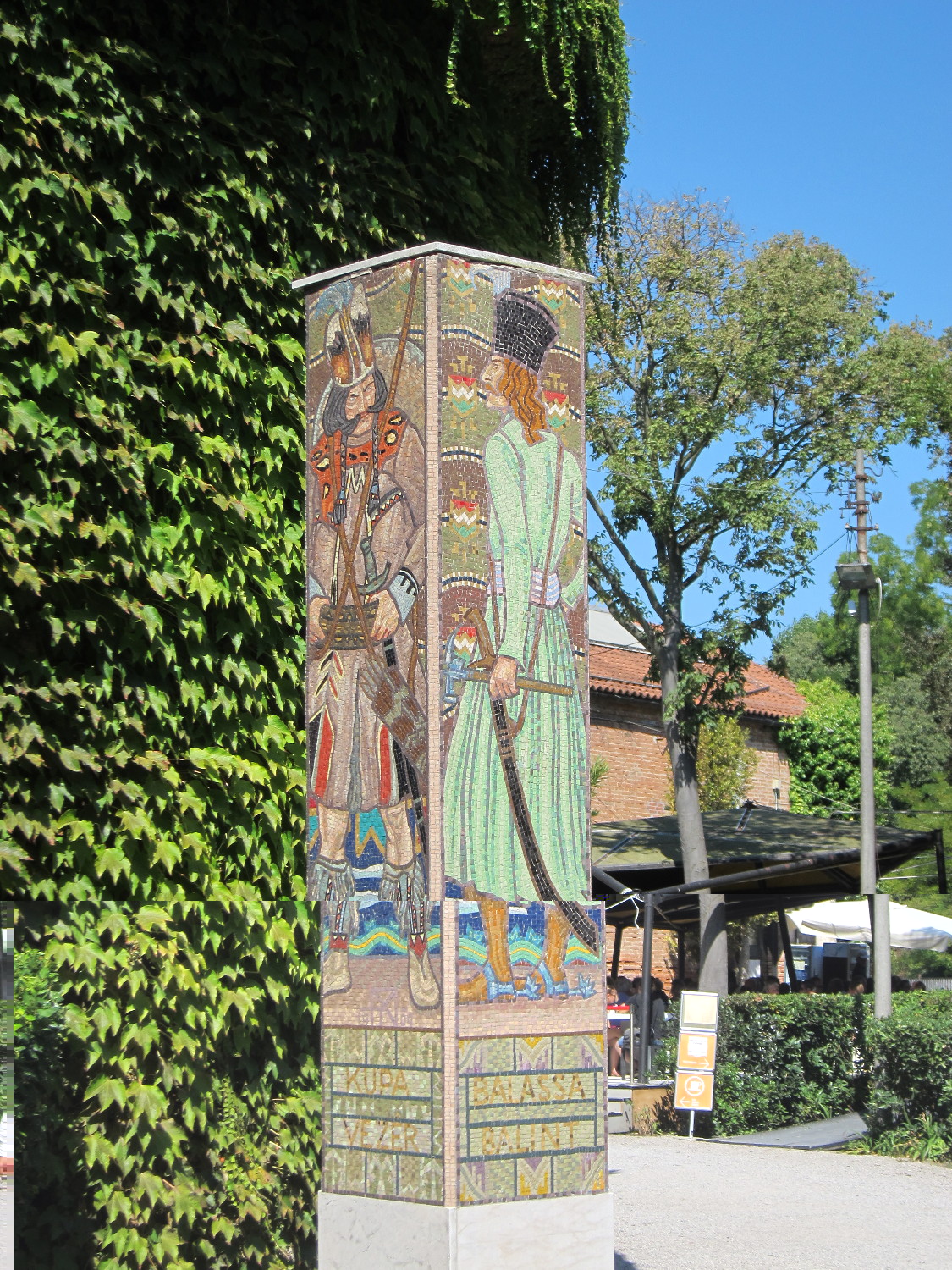
| Hungary's pavilion, built in
1909, was the second national pavilion to open at the Biennale, the
first was Belgium's in 1907. It was designed by the Art Nouveau
architect and sculptor Géza Maróti and inspired by
Hungarian history and traditions. Two Hungarian artists, inspired by
the Arts and Crafts movement, Sándor Nagy and Aladár
Körösfői Kriesch, contributed to its ornamentation. The
mosaics were designed by Körösfői and realized by Miksa Roth.
The pavilion remained closed for restoration and partial reconstruction
between 1948 and 1958. |